Farmhouse Dutch Oven Bread
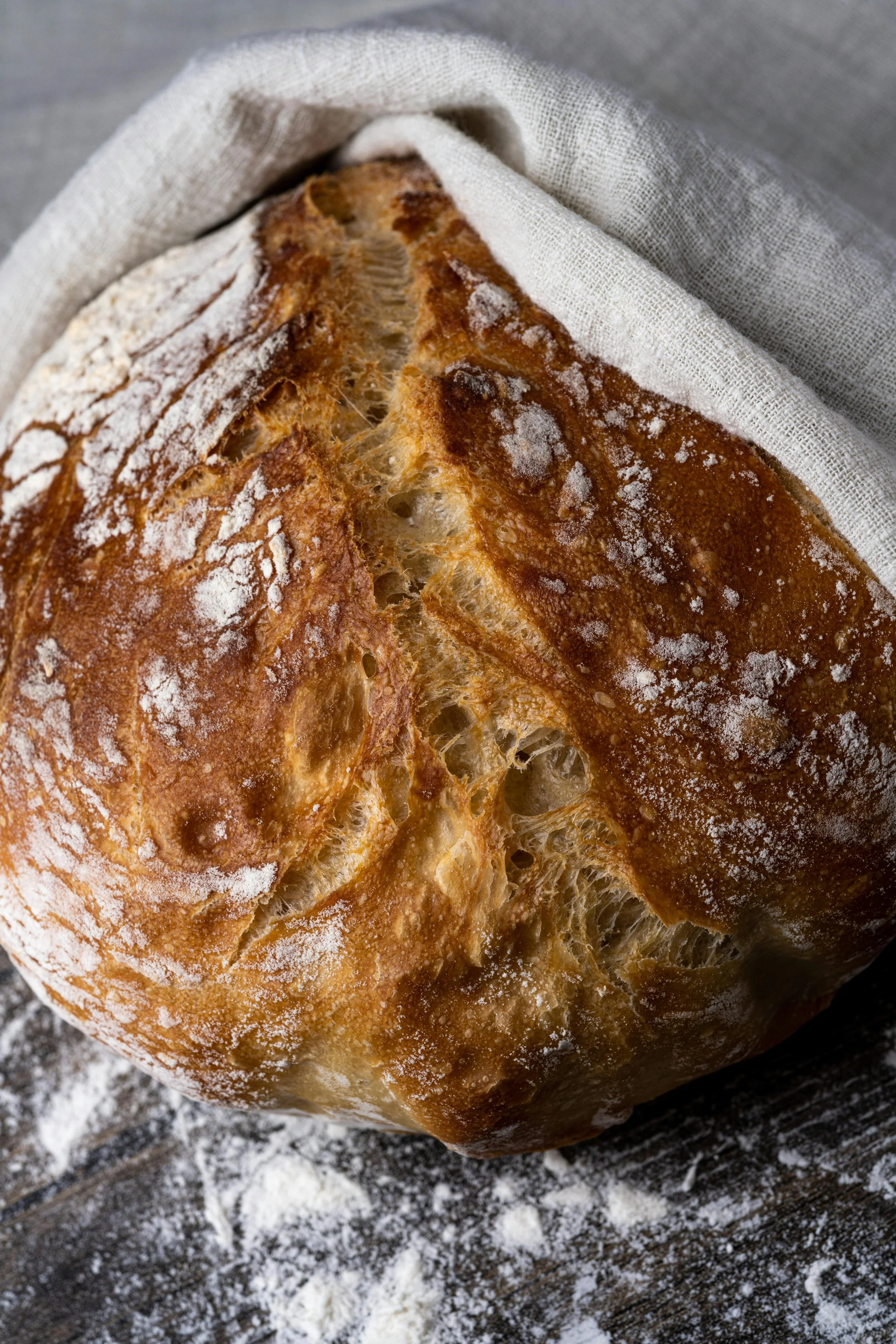
There is something deeply satisfying about pulling a loaf of bread from a hot dutch oven — that moment when the lid comes off and you see a golden, crackled crust staring back at you feels like a small miracle, every single time. This is the kind of bread that fills the whole house with warmth, the kind that makes people wander into the kitchen wondering what's baking.
And the best part? You don't need to knead it, you don't need much skill, and you don't need anything fancy — just flour, yeast, salt, water, and a little patience.
Servings:
12 Slices
Prep Time:
5 Minutes
Rise Time:
2 -3 Hours
Cook Time:
45 Minutes
INGREDIENTS
450 grams bread flour (or plain flour)
2 teaspoons instant or rapid rise yeast
1.5 teaspoons cooking salt
375 ml very warm water (not boiling)
2 tablespoons extra flour for dusting
INSTRUCTIONS
Mix the dough: Combine 450 grams bread flour (or plain flour), 2 teaspoons instant or rapid rise yeast, and 1.5 teaspoons cooking salt in a large bowl and give them a stir. Add 375ml very warm water (not boiling) and mix with the handle of a wooden spoon until all the flour is incorporated. The dough will be wet, sticky and rough — that is exactly right. You are not kneading this, so don't be tempted to add more flour.
Rise: Cover the bowl with cling wrap or a clean plate and set it somewhere warm for 2–120 minutes until the dough has doubled in size and the surface looks bubbly and wobbly. For a deeper, more developed flavour, pop it in the fridge overnight (or up to 3 days) after it has risen — this step is optional but absolutely worth it.
Preheat the oven and dutch oven: Place your dutch oven (with lid on) into the oven and preheat to 230°C (210°C fan-forced). Allow it to heat for at least 30 minutes. If your dough has been in the fridge, take it out now and let it sit on the counter while the oven heats up.
Shape the dough: Dust your work surface with 2 tablespoons extra flour for dusting and scrape the dough out of the bowl — it will be sticky and that is fine. Using a dough scraper or spatula, fold the edges inward a few times to roughly form a round shape. Slide a piece of baking paper next to the dough, then flip it upside down onto the paper so the smooth side faces up. Don't stress about a perfect shape — this is farmhouse bread, rustic is the point.
Bake covered: Carefully remove the hot dutch oven from the oven and use the baking paper to lower the dough into the pot. Place the lid on and return to the oven. Bake covered for 30 minutes - the steam inside creates a beautiful rise before the crust sets.
Bake uncovered: Remove the lid and bake for a further 12–13 minutes until the crust is a deep golden brown and sounds hollow when tapped underneath. This is where all those beautiful cracks and ridges form.
Cool and slice: Lift the bread out onto a wire rack and resist the urge to cut into it straight away — leave it for at least 10 minutes to let the centre finish cooking. Then slice thickly and serve warm with a generous spread of creamed honey from Stuart's hives.
Notes
Bread flour gives you a chewier, more open crumb with bigger air pockets — but plain flour works beautifully too. If you have the time, refrigerating the risen dough overnight makes a noticeably more flavourful loaf. Cooked bread keeps well for 2 days, and can be frozen for up to 3 months.
Featured:
The Werombee Hive
Strawberry Jam
Picked from our own patch, made in our own kitchen — this is strawberry jam the way it was always meant to taste.
How to Enjoy:
Spread generously over warm lemonade scones with a dollop of cream.
Swirl through Greek yoghurt with a drizzle of honey for a simple breakfast.
Layer onto fresh sourdough toast with a little butter for the perfect morning.
Spoon over vanilla ice cream for an effortless and beautiful dessert.